Traditional Cookware Benefits: Unpacking Cast Iron & Clay
Discover the health and culinary advantages of traditional cookware like cast iron and clay pots. Enhance flavor, boost nutrients, and cook healthier for your family.
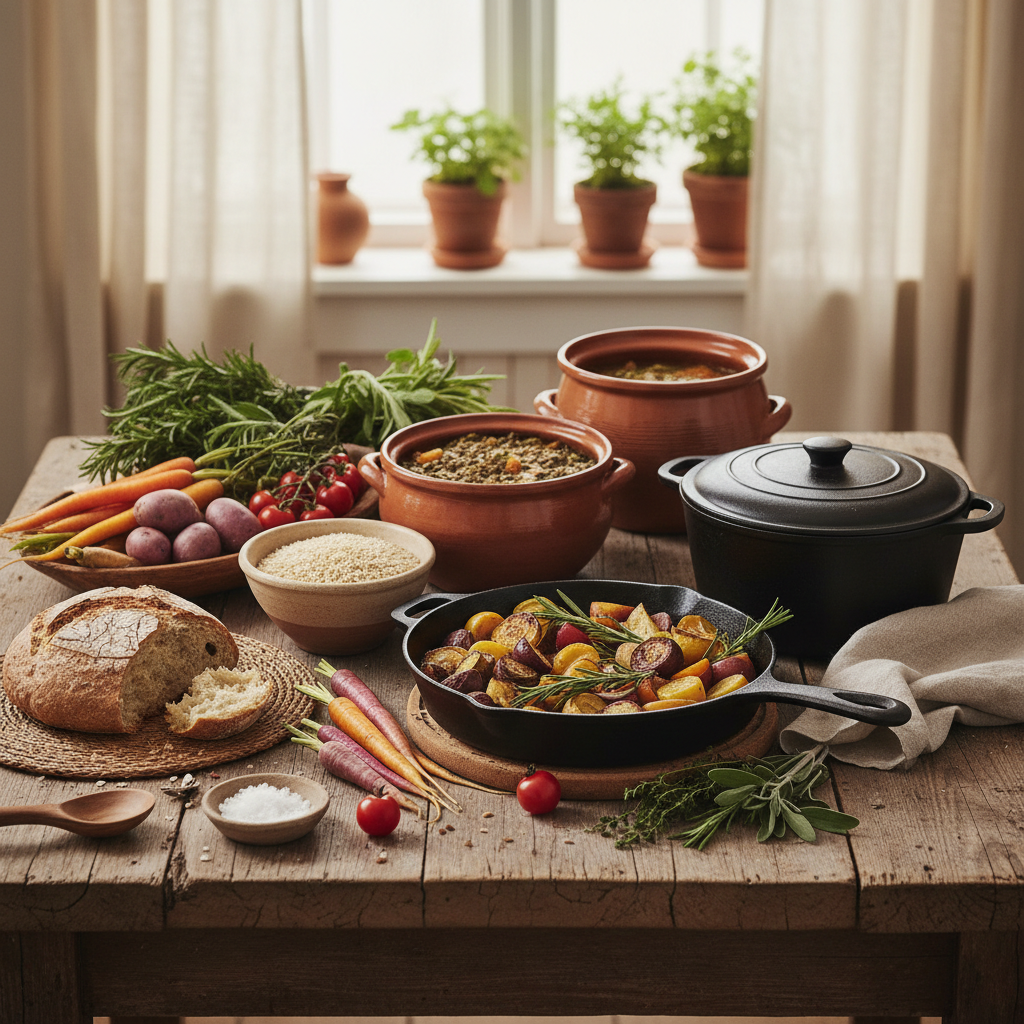
Traditional cookware benefits, particularly from materials like cast iron and clay, offer a wealth of advantages for health-conscious cooking. These time-honored implements provide superior heat distribution, enhance food's natural flavors, and can even contribute beneficial minerals to your diet, making them excellent choices for an organic lifestyle.
## Why Choose Traditional Cookware over Modern Options?
Modern non-stick pans often contain synthetic coatings that can degrade at high temperatures, potentially releasing harmful fumes and chemicals. Traditional cookware, such as cast iron and clay, offers a durable, chemical-free alternative, promoting healthier cooking practices.
These natural materials are robust and built to last generations, reducing waste compared to frequently replaced synthetic-coated pans. Their inherent qualities make them perfect for slow cooking and preserving nutrient integrity.
## What are the Main Benefits of Cast Iron Cookware?
Cast iron cookware is renowned for its exceptional heat retention and even heat distribution, which prevents hot spots and cooks food uniformly. This material can withstand extremely high temperatures, making it ideal for searing, frying, and baking.
Another significant benefit is its ability to naturally leach small amounts of iron into food, which can be particularly advantageous for individuals at risk of iron deficiency. A well-seasoned cast iron pan also develops a natural non-stick surface over time, reducing the need for excessive cooking oils.
Its durability is unmatched; with proper care, a cast iron skillet can be passed down through families. This makes it a sustainable choice that aligns perfectly with organic living principles.
## How Do Clay Pots Enhance Flavor and Nutrition?
Clay pots, especially unglazed earthenware, are incredibly porous. This allows steam and moisture to circulate during cooking, resulting in exceptionally tender and flavorful dishes without drying out the food. The natural breathability helps retain nutrients that might otherwise be lost through evaporation.
Cooking in clay pots, often referred to as slow cooking, allows flavors to meld deeply and evenly. It’s particularly effective for stews, braises, and roasts, yielding rich, earthy tastes that are hard to replicate with other materials.
Furthermore, the alkalinity of certain clays can interact with the acidity of foods, balancing pH levels and making dishes more digestible. This ancient method of cooking truly maximizes both taste and nutritional value.
## Is Cooking with Traditional Cookware Safe and Healthy?
Absolutely. Traditional cookware like cast iron and clay pots are generally considered among the safest options available. They are free from PFOA, PTFE, and other synthetic chemicals found in many modern non-stick coatings.
Cast iron contributes dietary iron, as mentioned, which is a vital nutrient. Clay cookware, when properly sourced and unglazed, is inert and does not react with food acids, ensuring pure taste and chemical-free results.
However, it's crucial to ensure that any clay cookware used is food-grade and free from lead or cadmium glazes, which are sometimes found in decorative or imported earthenware not intended for cooking.
## Essential Care Tips for Long-Lasting Traditional Cookware
Proper care ensures the longevity and performance of your traditional cookware. For cast iron, regular seasoning with oil prevents rust and maintains its non-stick properties. Avoid harsh soaps; instead, scrub with a stiff brush and hot water, then dry thoroughly before applying a thin layer of oil.
Clay pots require soaking before initial use and often before each subsequent use to prevent cracking and prepare them for even cooking. They should not be subjected to sudden temperature changes, as this can cause thermal shock and breakage. Hand washing with mild soap and careful drying are essential.
– Cast iron enriches food with dietary iron. – Clay pots enhance natural flavors and retain moisture. – Both options are chemical-free and extremely durable. – Proper seasoning is key for cast iron maintenance. – Clay requires careful temperature management and pre-soaking. – Choose unglazed, food-grade clay for health and safety.